Everkin started at a rave. Our group got split up, nobody’s texts were going through, and we spent three hours trying to find each other. Afterward we started wondering whether we could build something that worked when the cell network didn’t.
That’s what Everkin is: a small device you carry, paired with an app on your phone. Your phone talks to the device over Bluetooth, the devices talk to each other over radio, and everyone in your group shows up on a map, with or without service.
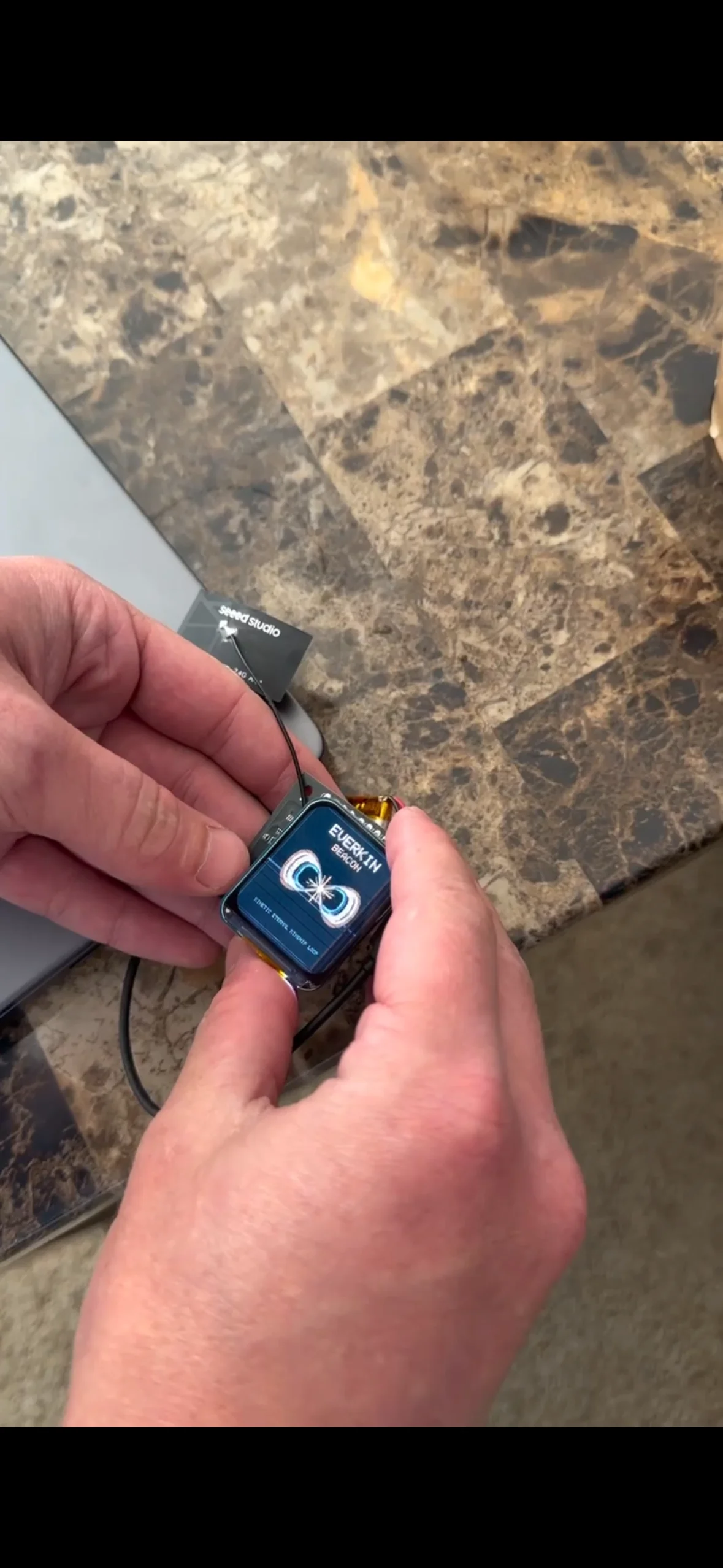
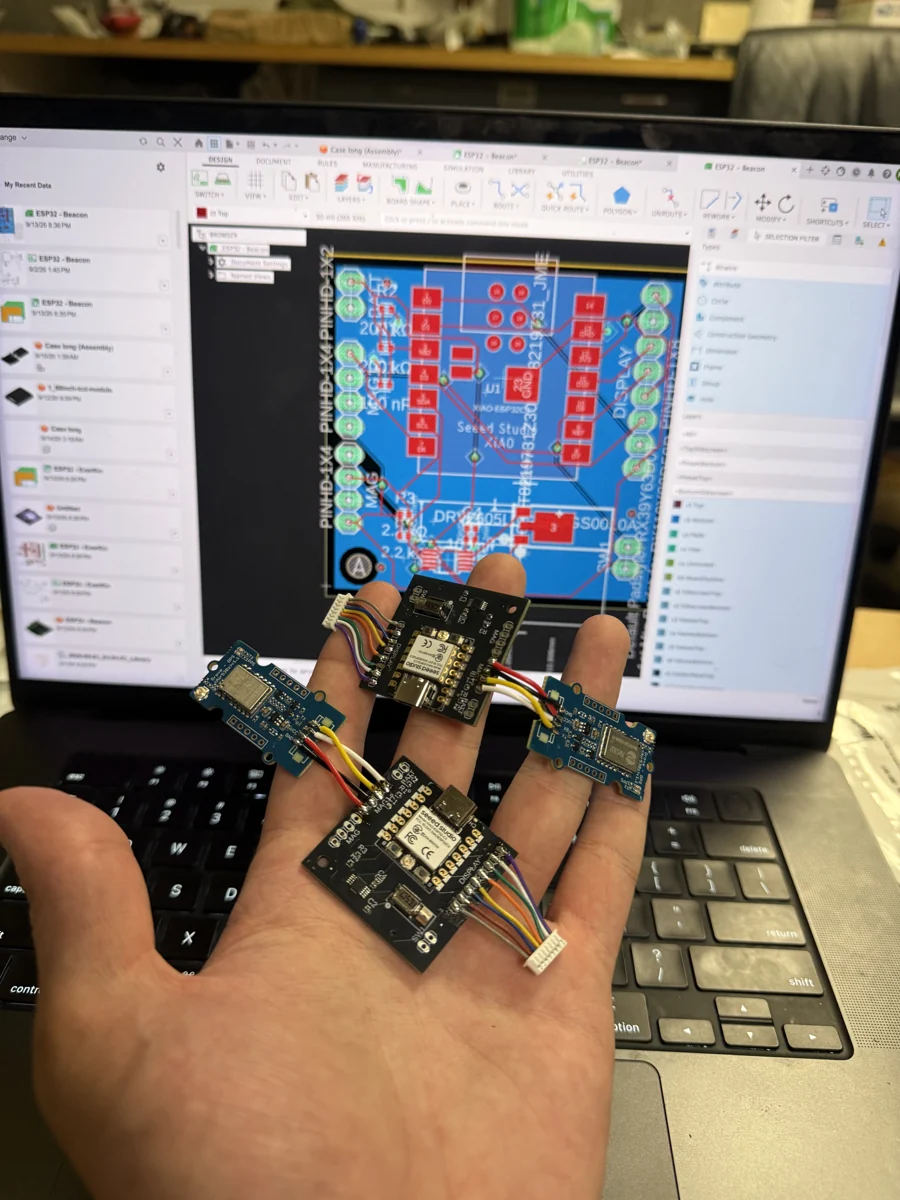
I didn’t know much about any of this when we started. I’ve been working with an engineer, and we both work on the schematics and PCB design. Most of my time has gone into the app and into getting the device and the app talking to each other.
The hardware is built around an ESP32-C3, a battery, and a small display. We’d scheduled our first test around when the parts were supposed to arrive. They took way longer than that. Once they showed up, getting something on the screen took an afternoon. Getting two devices to talk to each other took two days, mostly because the app has a lot of dependencies and every one of them seemed to break or stall along the way.
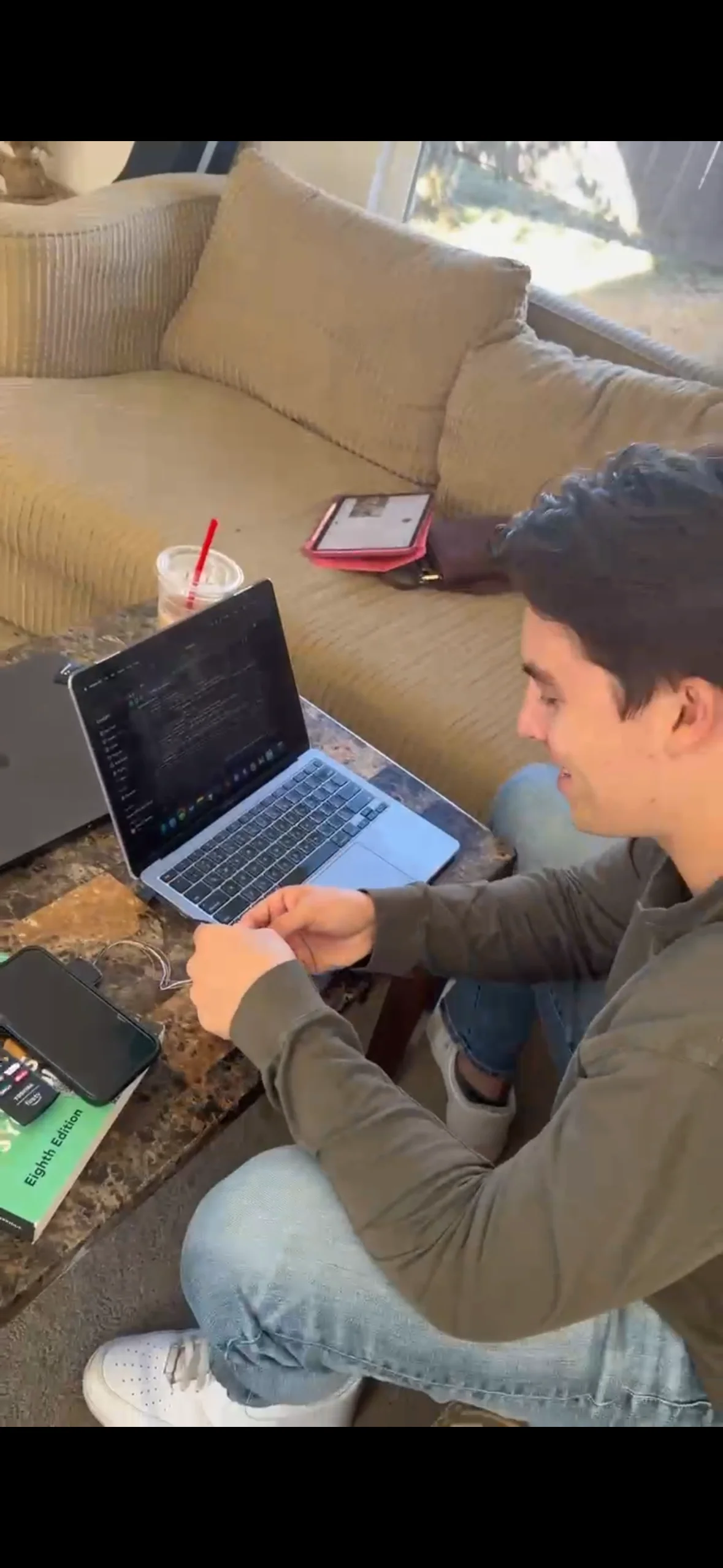
On the app side I’ve been working on location permissions, the Bluetooth connection to the device, a crew code so friends can join the same group, and the map. At one point location sharing stopped working entirely. The fix was a quick change to our Firebase deployment, which is pretty typical of this project: nothing has been impossible, but there’s always some small problem waiting.
Lately the board has been going through revisions, and we’ve been working on a case using 3D models of the actual components, so we can see where the USB port, battery, and buttons end up before printing anything. I’ve done a little of the modeling myself and learned a lot about how it works, though I’m still pretty new to it. We went with flat buttons so they don’t get pressed by accident in a pocket.
We work wherever we can, mostly remotely: sharing code, comparing what we’ve tried, and getting in the same room for a weekend to build when we can.
We’re not selling anything yet. The device, firmware, and app still need to work together reliably first.
Update, October 29, 2026: Hardware takes a long time to get right, so we’re also starting on simpler products we can get out sooner, like earplugs and fans. That lets us start reaching the people we’re building Everkin for now. We’re not giving up on the device. The problem of finding your friends when your phone can’t help is still the one we want to solve.